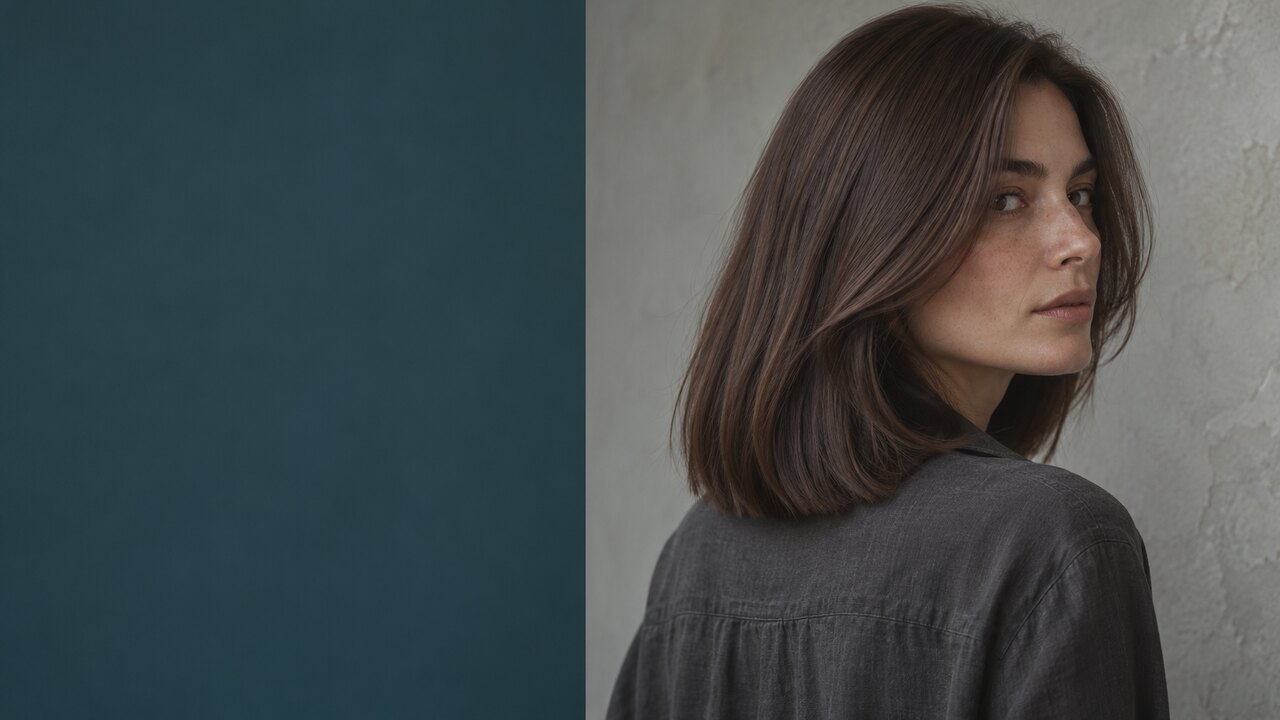
Start with a photo of the intended haircut and finish. Note how dark the brown should be, whether you want a cool, neutral or warm tone, and where that tone matters most. A daylight reference is useful alongside any close-up that shows the part of the hair you want to discuss.
Three looks to compare
For a cool deep brown on a sleek, shoulder-length cut, look at the mid-lengths and the line along the ends. For chestnut on long layers, look where the layers overlap. For warm copper brown waves, look at the tone across the lit surface and the shadow within the bends. These are three separate visual references.
Turn a finished look into a clear brief
Record depth, tone, haircut and styling in separate fields. Share the starting base and whether the hair has previously been coloured or lightened. Treat the finished look as a target and agree how you will verify it on a sample or strand. The reference images in this guide illustrate looks and do not represent results from a specific formula.
Related guide: How to Read a Professional Hair Color Shade Chart