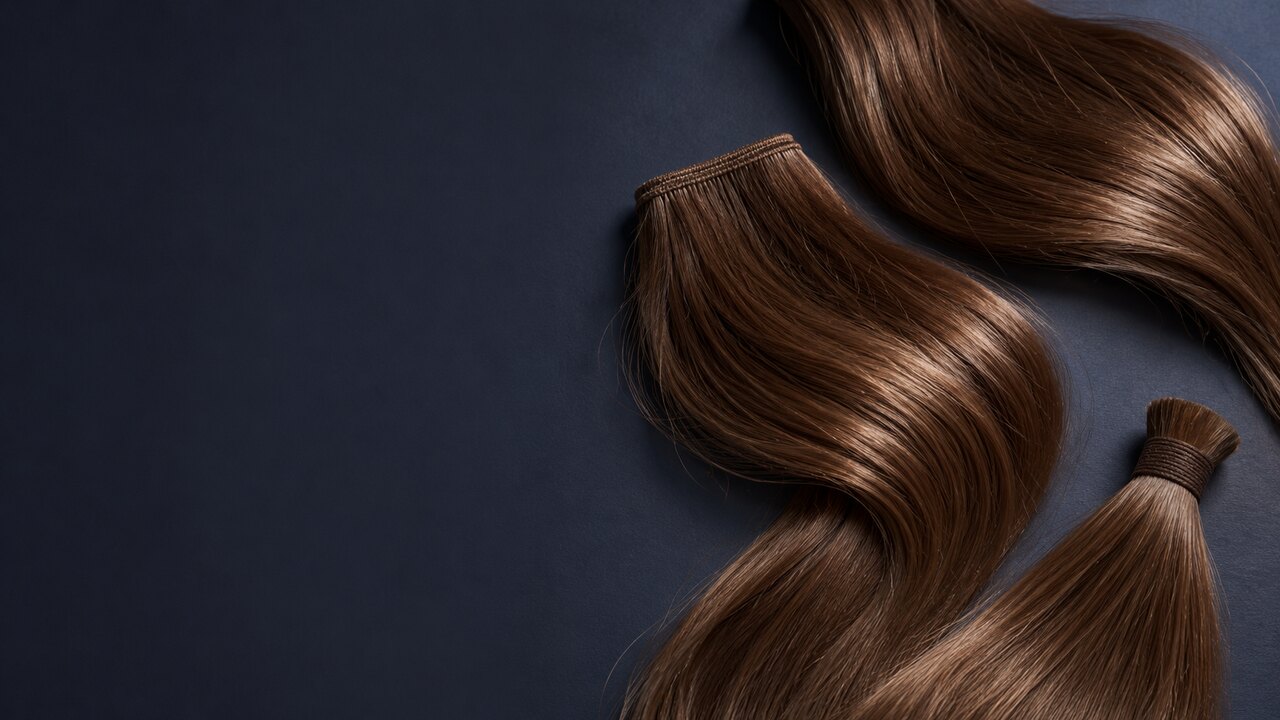
A brown shade reference describes the color you want. The starting base tells you what the hair looked like before coloring and what it has been through. Naturally dark hair and previously colored hair can look similar before sampling, so record their histories separately.
Describe the base at each part of the hair
Note the starting depth at the roots, mid-lengths and ends. Mark which sections are untreated, previously colored or lightened. If the history is unknown, record that as well. The notes help explain which part of the hair the sample should represent.
Keep the same target reference across the samples
Use one reference photo and mark the tone and depth you want to match. Ask for swatches on the starting bases relevant to your product brief. Label the bases and compare the same part of each dry swatch under consistent lighting. Start with physical samples when approving the shade. These editorial images illustrate what to look at and show no measured product results.
For a BINNUO private-label hair color brief, include the target shade, starting bases to evaluate and the section that matters most.
Related guide: How to Read a Professional Hair Color Shade Chart